When Should You Consult a Cancer Specialist in Ghaziabad?
A cancer diagnosis can be overwhelming, but timely medical evaluation and appropriate guidance can make an important difference in cancer care. Many people are unsure about when they should consult an oncologist or cancer specialist. Some may wait until symptoms become severe, while others may not know which specialist to approach after receiving an abnormal test report.
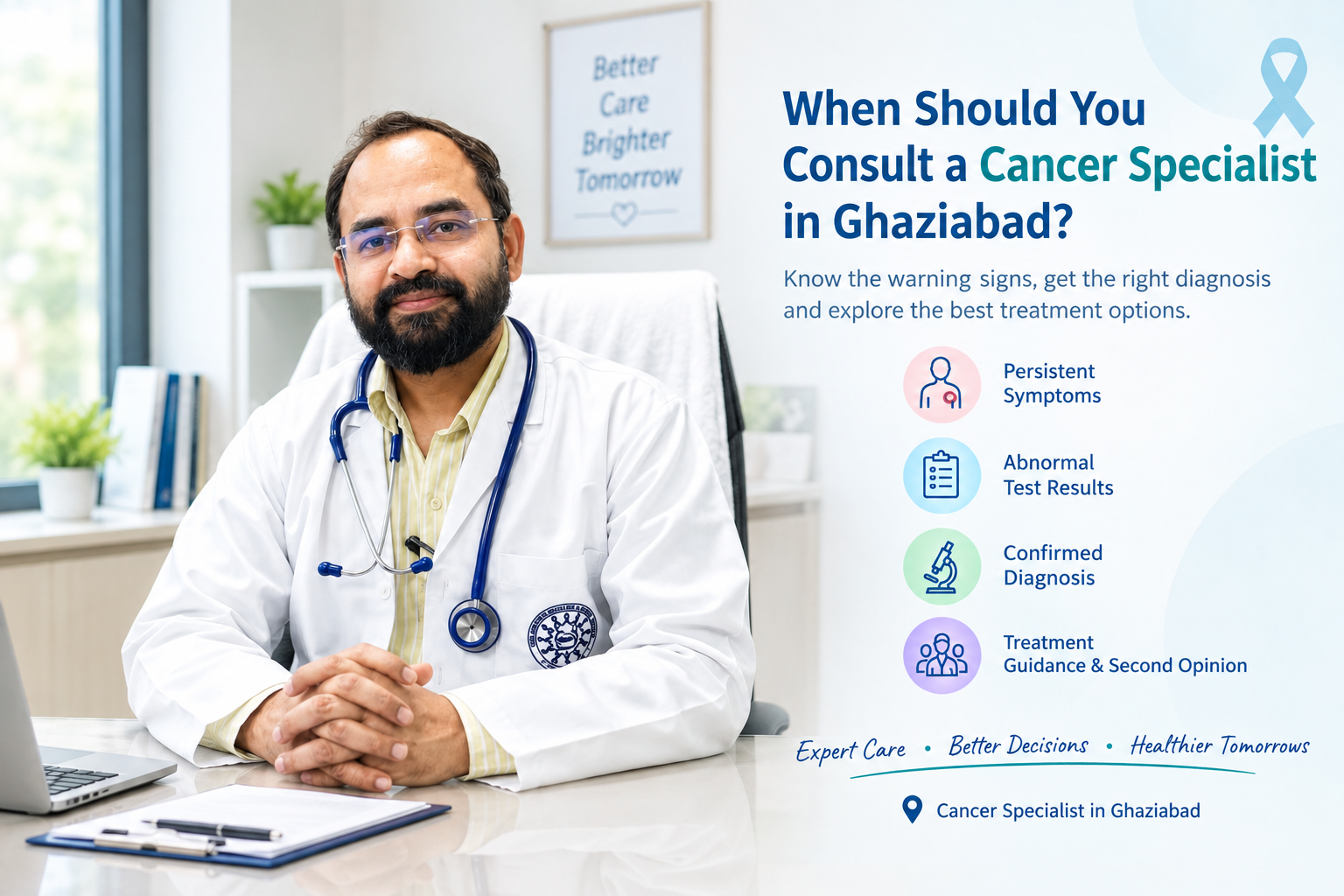
If you have persistent symptoms, an abnormal investigation, a confirmed cancer diagnosis, or concerns about your treatment plan, consulting a cancer specialist in Ghaziabad can help you understand your condition and the appropriate next steps.
Who Is a Cancer Specialist?
A cancer specialist, also known as an oncologist, is a doctor who specializes in the diagnosis, treatment and management of cancer.
Depending on the type and stage of cancer, treatment may involve one or more approaches, including:
- Chemotherapy
- Radiation therapy
- Cancer surgery
- Immunotherapy
- Targeted therapy
- Hormonal therapy
- Palliative and supportive care
The appropriate treatment depends on factors such as the type of cancer, its stage, overall health, pathology reports and other medical findings.
When Should You Consult a Cancer Specialist?
You may consider consulting an oncologist in the following situations.
1. You Have Persistent or Unexplained Symptoms
Not every symptom indicates cancer. However, symptoms that persist, worsen or have no clear explanation should be evaluated by a qualified healthcare professional.
Depending on the type of cancer, possible warning signs may include:
- An unexplained lump or swelling
- Unusual or persistent bleeding
- Unexplained weight changes
- Persistent cough or voice changes
- Difficulty swallowing
- Changes in bowel or bladder habits
- A wound that does not heal
- Persistent or unexplained pain
- Significant changes in a mole or skin lesion
- Ongoing fatigue without an obvious explanation
These symptoms can occur because of many conditions other than cancer. Only a medical evaluation can determine the underlying cause.
2. Your Screening Test Shows an Abnormal Result
Cancer screening tests are designed to identify certain cancers or changes that may require further evaluation.
If a screening test or imaging investigation shows an abnormality, your doctor may recommend additional tests. Depending on the findings, you may be referred to an oncology specialist.
Examples may include abnormalities detected through:
- Mammography
- Pap tests or HPV-related screening
- Imaging studies
- Blood investigations
- Other cancer screening examinations
An abnormal screening result does not automatically mean that you have cancer, but it should be appropriately evaluated.
3. A Biopsy Has Confirmed Cancer
If a biopsy or pathology report confirms cancer, consulting an oncologist is an important next step.
A cancer specialist can review your pathology report and other investigations to understand:
- The type of cancer
- The location of the cancer
- The stage, where applicable
- Relevant biological or molecular characteristics
- Available treatment options
Based on this information, the oncology team can develop an individualized treatment plan.
4. You Have Been Referred for Cancer Treatment
Your physician may refer you to an oncologist after reviewing your symptoms, investigations or diagnosis.
Depending on your condition, cancer treatment may involve a multidisciplinary team that can include medical oncologists, radiation oncologists and surgical oncologists.
This coordinated approach can help determine which treatment or combination of treatments may be appropriate.
Why Is Early Oncology Consultation Important?
Early consultation can help patients understand their diagnosis and available treatment options before making important decisions.
A cancer specialist can assess your medical reports, discuss the diagnosis and explain possible treatment approaches based on your individual circumstances.
Early evaluation may also help avoid unnecessary delays in diagnosis and treatment when cancer is suspected or confirmed.
However, it is important to remember that the timing and type of treatment varies from patient to patient.
What Should You Take to Your Oncology Consultation?
To make your consultation more useful, carry your available medical records and investigation reports.
These may include:
- Biopsy or pathology reports
- PET-CT, CT or MRI reports
- Blood test reports
- Previous treatment records
- Prescription and medication details
- Previous surgery records
- Discharge summaries
- Relevant medical history
Keeping your reports organized can help the specialist understand your medical history more efficiently.
What Happens During a Cancer Specialist Consultation?
During an oncology consultation, the doctor may review your medical history, symptoms and previous investigations.
Depending on your situation, the specialist may:
- Review your medical and family history.
- Examine relevant symptoms and clinical findings.
- Review pathology and imaging reports.
- Assess the diagnosis and stage where applicable.
- Discuss possible treatment options.
- Recommend additional investigations if required.
- Explain the next steps in your cancer care.
The exact consultation process varies according to the patient’s condition.
Cancer Treatment in Ghaziabad
Patients looking for cancer treatment in Ghaziabad may require different types of oncology services depending on their diagnosis.
Cancer care can include consultation and treatment planning involving:
- Medical oncology
- Radiation oncology
- Surgical oncology
- Chemotherapy
- Radiation therapy
- Immunotherapy
- Targeted treatment
- Supportive and palliative care
The appropriate treatment should be decided after a proper medical evaluation rather than based solely on online information.
How to Choose a Cancer Specialist in Ghaziabad?
When selecting an oncologist, consider factors such as:
- Relevant oncology qualifications and experience
- Specialization related to your cancer type
- Access to appropriate diagnostic facilities
- Availability of multidisciplinary cancer care
- Communication and explanation of treatment options
- Follow-up and supportive care
Patients should feel comfortable discussing their diagnosis, treatment options and concerns with their healthcare team.
Frequently Asked Questions
When should I see a cancer specialist?
You should consider consulting a cancer specialist if you have persistent or unexplained symptoms, an abnormal test result, a confirmed cancer diagnosis, or have been referred for oncology evaluation.
Does every lump or unusual symptom mean cancer?
No. Many symptoms and lumps are caused by conditions other than cancer. However, persistent or concerning changes should be evaluated by a qualified healthcare professional.
Should I consult an oncologist after a cancer diagnosis?
Yes. If cancer has been confirmed, an oncology consultation can help you understand the diagnosis, staging and available treatment options.
Can I take a second opinion from another cancer specialist?
Yes. A second opinion may help you better understand your diagnosis and treatment options, particularly when the diagnosis or proposed treatment is complex.
What reports should I bring to an oncologist?
Bring relevant pathology or biopsy reports, imaging reports, blood tests, previous treatment records, prescriptions and other medical documents available to you.
Conclusion
Knowing when to consult a cancer specialist in Ghaziabad can help patients seek appropriate medical guidance at the right time. Persistent symptoms, abnormal investigations, a confirmed cancer diagnosis or uncertainty about a recommended treatment can all be reasons to seek an oncology consultation.
If you or a family member has been diagnosed with cancer or has concerns about a possible cancer diagnosis, discuss your situation with a qualified cancer specialist and take the next step based on professional medical advice.
Dr. Rishi Kumar Gupta provides oncology consultation and cancer care guidance in Ghaziabad, helping patients understand their diagnosis and explore appropriate treatment options based on their individual medical condition.