
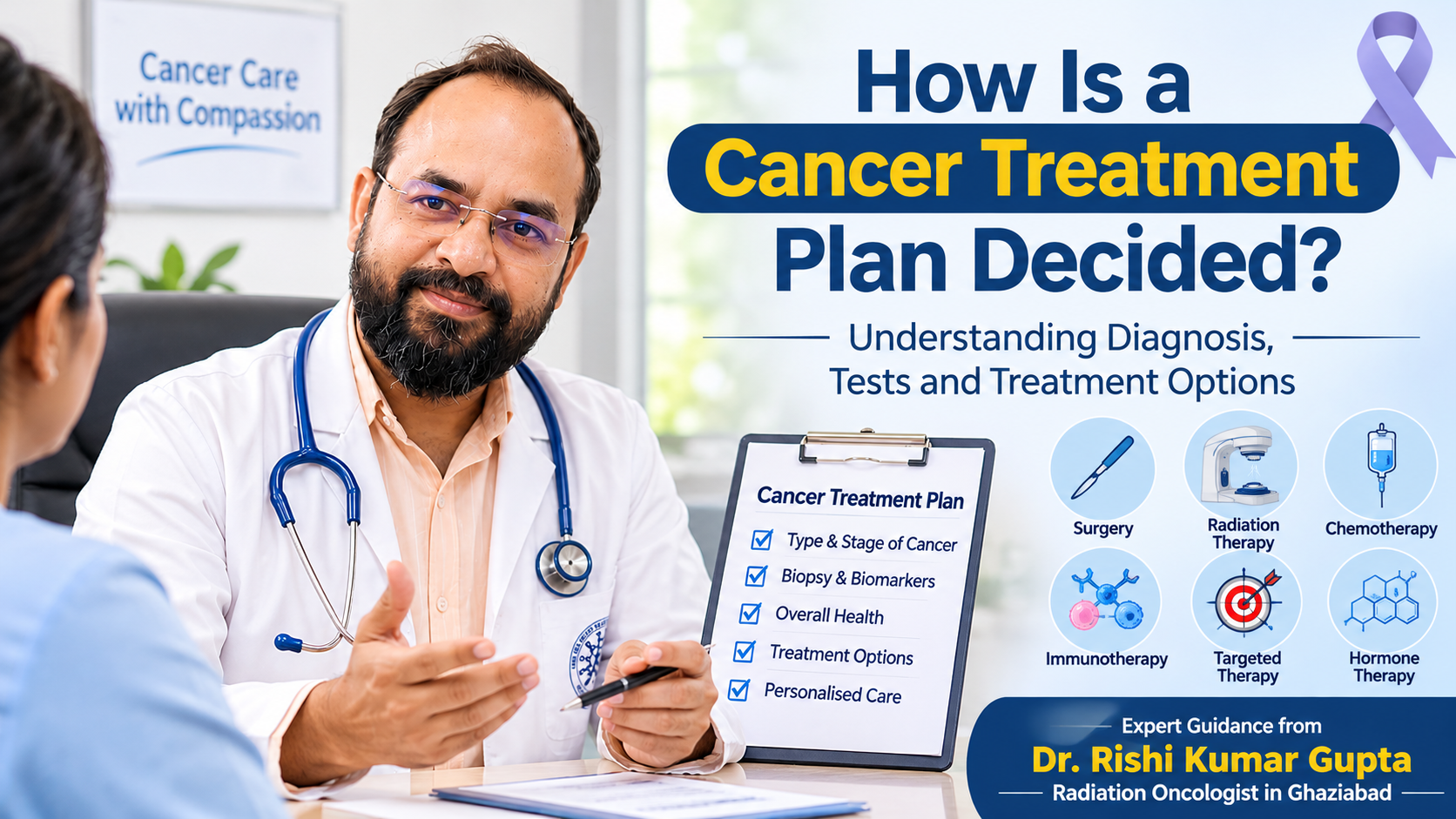
How Is a Cancer Treatment Plan Decided? A Complete Guide for Patients
A cancer diagnosis can raise many questions for patients and their families. One of the most important is: How do doctors decide which cancer treatment is right for a patient?
Cancer treatment is not the same for everyone. The treatment plan depends on several factors, including the type of cancer, its stage, biopsy findings, overall health, and the patient’s individual needs.
Dr. Rishi Kumar Gupta – Radiation Oncologist in Ghaziabad, with 15+ years of experience in cancer care, provides consultation and guidance to help patients understand their diagnosis and available treatment options.
Cancer treatment planning involves careful evaluation of medical reports, diagnostic investigations, and the potential benefits and risks of different treatments. The goal is to develop an individualised approach that considers the patient’s medical condition and treatment preferences.
In this article, we explain how doctors decide a cancer treatment plan, which factors influence treatment decisions, and what patients should know before starting treatment.
1. Understanding the Type of Cancer
The first step in deciding a cancer treatment plan is identifying the exact type of cancer.
Cancer can develop in different organs and tissues, and each type may behave differently. For example:
- Breast cancer
- Lung cancer
- Oral cancer
- Cervical cancer
- Prostate cancer
- Colorectal cancer
- Blood cancer
- Head and neck cancer
A biopsy and pathology examination generally help confirm the diagnosis and identify the cancer type. Additional tests may be needed to understand the characteristics of the tumour.
The treatment approach is selected according to the specific cancer diagnosis rather than symptoms alone.
2. Determining the Stage of Cancer
Cancer staging is another important factor in treatment planning.
Staging helps doctors understand how large the tumour is, whether nearby lymph nodes are involved, and whether cancer has spread to other parts of the body.
Depending on the cancer type, staging may involve:
- CT Scan
- MRI Scan
- PET-CT Scan
- Ultrasound
- Blood investigations
- Biopsy and pathology reports
- Other specialised investigations
Many solid cancers are classified using stages I to IV, although staging systems differ between cancer types.
Generally, early-stage cancers may be treated with surgery or radiation therapy, while more advanced cancers may require chemotherapy, immunotherapy, targeted therapy, radiation therapy, or a combination of treatments.
However, the treatment plan depends on the specific diagnosis and cannot be decided by the stage alone.
3. Reviewing Biopsy and Pathology Reports
A biopsy is an important investigation in cancer diagnosis. It involves examining a tissue sample under a microscope to identify cancer cells and determine their characteristics.
The pathology report may provide information about:
- Type and subtype of cancer.
- Tumour grade.
- Specific cellular characteristics.
- Relevant receptor status.
- Additional findings that may influence treatment.
In selected cancers, doctors may recommend immunohistochemistry (IHC) or molecular and biomarker testing.
These investigations can help identify treatments that may be more suitable for particular cancer subtypes.
4. Understanding Biomarker and Molecular Testing
Modern cancer treatment increasingly uses information about the biological characteristics of a tumour.
Biomarker testing can identify specific proteins, genes, or other characteristics that may influence how a cancer responds to certain treatments.
For example:
- HER2 testing may help guide treatment decisions in selected breast and other cancers.
- EGFR mutation testing may help guide targeted treatment in certain lung cancers.
- Hormone receptor testing helps guide treatment decisions in selected breast cancers.
- Other molecular tests may help identify targeted treatment options in specific cancer types.
Not every patient requires biomarker testing. The need for these tests depends on the cancer diagnosis and established clinical recommendations.
5. Evaluating the Patient’s Overall Health
Cancer treatment planning considers more than the tumour itself.
Doctors also assess the patient’s general health and ability to tolerate the proposed treatment.
Important considerations include:
- Age and general physical condition.
- Kidney and liver function.
- Heart and lung health.
- Diabetes or other existing medical conditions.
- Nutritional status.
- Current medicines.
- Previous cancer treatments.
- Daily activity and functional status.
For example, a patient with certain medical conditions may require additional precautions or adjustments to a treatment plan.
The aim is to select an appropriate treatment while considering patient safety and quality of life.
6. Choosing the Most Appropriate Cancer Treatment
After reviewing the diagnosis, stage, pathology, biomarkers, and general health, the oncology team discusses suitable treatment options.
The main cancer treatment approaches include:
A. Surgery
Cancer surgery involves removing a tumour or affected tissue.
It may be recommended for selected localised cancers or as part of a combined treatment plan.
B. Radiation Therapy
Radiation therapy uses high-energy radiation to damage cancer cells and prevent them from growing and dividing.
It may be recommended:
- As the primary treatment for selected cancers.
- Before surgery to shrink a tumour in certain situations.
- After surgery to reduce the risk of local recurrence.
- Alongside chemotherapy for selected cancers.
- To relieve symptoms caused by advanced cancer.
Modern radiation techniques include IMRT, IGRT, stereotactic radiotherapy, and other specialised approaches.
C. Chemotherapy
Chemotherapy uses medicines to destroy cancer cells or slow their growth.
It may be given before surgery, after surgery, alongside radiation therapy, or as the main treatment for certain cancers.
The medicines and schedule depend on the cancer type and the patient’s condition.
D. Immunotherapy
Immunotherapy helps the body’s immune system recognise and attack cancer cells.
It is useful for selected cancer types and depends on factors such as tumour characteristics, biomarkers, and previous treatment history.
E. Targeted Therapy
Targeted therapy uses medicines that act on specific molecular changes or proteins involved in cancer growth.
Biomarker and molecular testing may help identify patients who could benefit from these treatments.
F. Hormone Therapy
Hormone therapy may be recommended for selected hormone-sensitive cancers, particularly certain breast and prostate cancers.
It works by blocking hormones or reducing their production to help control cancer growth.
7. Why Is a Multidisciplinary Team Important?
Cancer treatment often requires the expertise of different specialists.
A multidisciplinary team may include:
- Surgical Oncologist: Evaluates whether cancer surgery is appropriate.
- Medical Oncologist: Plans systemic treatments such as chemotherapy, immunotherapy, and targeted therapy.
- Radiation Oncologist: Evaluates and plans radiation therapy.
- Radiologist: Interprets imaging investigations.
- Pathologist: Examines biopsy and tissue samples.
- Supportive Care Specialists: Help manage symptoms, nutrition, rehabilitation, and emotional well-being.
These specialists may review the patient’s reports together and discuss the most appropriate treatment approach.
A multidisciplinary approach can help coordinate different aspects of cancer care and ensure that important treatment considerations are evaluated.
8. Considering the Benefits and Side Effects of Treatment
Before finalising a cancer treatment plan, doctors explain the expected benefits, possible risks, and side effects of the recommended treatment.
For example:
| Treatment | Possible side effects |
|---|---|
| Surgery | Pain, bleeding, infection and recovery-related issues |
| Radiation therapy | Fatigue, skin irritation and site-specific effects |
| Chemotherapy | Nausea, fatigue, hair loss and low blood counts |
| Immunotherapy | Immune-related inflammation and other side effects |
| Targeted therapy | Skin reactions, diarrhoea and drug-specific effects |
Not every patient experiences these side effects. Their nature and severity depend on the treatment, dosage, and individual health.
Patients should discuss available supportive treatments and ways to manage side effects with their oncology team.
9. Considering the Patient’s Preferences and Quality of Life
An effective cancer treatment plan should also consider the patient’s needs and preferences.
Doctors discuss:
- Expected treatment benefits.
- Possible side effects and complications.
- Treatment duration and schedule.
- Hospital visits and follow-up requirements.
- Fertility considerations, where relevant.
- Financial and practical concerns.
- Impact on daily activities and quality of life.
Patients should feel comfortable asking questions and discussing their concerns before agreeing to a treatment plan.
10. Monitoring the Response to Cancer Treatment
Cancer treatment planning does not end when treatment begins.
Doctors regularly evaluate how the patient is responding to treatment.
Monitoring may include:
- Physical examinations.
- Blood investigations.
- CT or MRI scans.
- PET-CT scans, where appropriate.
- Tumour markers in selected cancers.
- Assessment of symptoms and treatment side effects.
If the cancer responds well, the planned treatment may continue. If the response is inadequate or significant side effects occur, the oncology team may reconsider the treatment approach.
Follow-up is important during and after cancer treatment.
What Documents Should You Bring for a Cancer Consultation?
If you are visiting an oncologist for a cancer treatment consultation or second opinion, keep the following documents ready:
- Biopsy and pathology reports.
- CT, MRI, PET-CT, or ultrasound reports.
- Previous blood investigation reports.
- Immunohistochemistry and biomarker reports, if available.
- Previous prescriptions and treatment summaries.
- Details of chemotherapy or radiation therapy already received.
- Current medication list and medical history.
These documents help the doctor understand your diagnosis and assess the next appropriate steps.
When Should You Seek a Second Opinion for Cancer Treatment?
A second opinion may be helpful when:
- You want to understand alternative treatment approaches.
- You have been diagnosed with a rare or complex cancer.
- You are uncertain about the recommended treatment.
- You want another specialist to review your biopsy and imaging reports.
- You have questions about the benefits and risks of a proposed treatment.
A second opinion can provide additional information and help you make a more informed decision. Discuss the timing with your treating doctor so that necessary treatment is not delayed.
Consult Dr. Rishi Kumar Gupta – Radiation Oncologist in Ghaziabad
Choosing the right cancer treatment requires careful evaluation of the diagnosis, stage, pathology reports, and individual health conditions.
Dr. Rishi Kumar Gupta is a Radiation Oncologist in Ghaziabad with 15+ years of experience in cancer care. He provides oncology consultation and guidance regarding radiation therapy, chemotherapy, immunotherapy, and individualised cancer treatment planning.
Patients and their families can seek consultation to understand their diagnosis, discuss available treatment options, and obtain guidance regarding the next steps in cancer care.
If you or a family member has been diagnosed with cancer, bring your medical reports and previous treatment records for a detailed consultation.
Visit the official website: https://drrishikrgupta.com/
Frequently Asked Questions (FAQs)
1. How do doctors decide the best treatment for cancer?
Doctors consider the cancer type, stage, biopsy findings, tumour characteristics, biomarker results, overall health, and patient preferences before recommending treatment.
2. Does every cancer patient require chemotherapy?
No. Chemotherapy is not necessary for every cancer patient. Depending on the diagnosis, treatment may involve surgery, radiation therapy, immunotherapy, targeted therapy, hormone therapy, or a combination.
3. Can cancer treatment plans change during treatment?
Yes. Doctors may modify a treatment plan depending on the patient’s response, new investigation findings, side effects, or changes in the clinical condition.
4. What is the role of a radiation oncologist in cancer treatment?
A radiation oncologist specialises in evaluating and planning radiation therapy. They determine whether radiotherapy may be appropriate, select the treatment technique and dose, and monitor treatment-related effects.
5. Are biopsy reports enough to decide cancer treatment?
A biopsy is essential for confirming many cancer diagnoses, but additional investigations such as imaging, blood tests, biomarker testing, and staging assessments may be needed before finalising treatment.
6. Should I get a second opinion before starting cancer treatment?
A second opinion can be helpful if you want to understand your diagnosis and explore available treatment options. Discuss the appropriate timing with your treating oncologist.
Conclusion
Cancer treatment planning is a detailed process that involves understanding the cancer type, stage, pathology findings, molecular characteristics, and the patient’s overall health.
There is no single treatment approach suitable for every cancer patient. A carefully evaluated and individualised treatment plan helps doctors select appropriate treatment options while considering potential benefits, risks, and quality of life.
If you are looking for a cancer specialist in Ghaziabad, consult an experienced oncology professional to understand your diagnosis and discuss suitable treatment options.